What Is Google E-E-A-T?
Google E-E-A-T is a quality system that Google uses to check whether content is reliable, helpful, and safe for users. The letters stand for Experience, Expertise, Authoritativeness, and Trust. These four factors help Google decide which pages deserve higher positions in search results. The idea is simple: users should find information that is accurate and created by people who truly understand the topic.
E-E-A-T is especially important for topics that affect a person’s life, such as health advice, financial guidance, legal information, or safety instructions. These topics are often called YMYL, which means “Your Money or Your Life.” Since wrong information in these areas can cause serious harm, Google pays extra attention to quality and credibility.
The History and Growth of E-E-A-T
The importance of E-E-A-T became very clear after Google’s core update in August 2018, which many people refer to as the “Medic Update.” During this update, many health and wellness websites lost rankings because their content did not show strong expertise or trust signals. This event made website owners realize that Google was focusing more on content quality than ever before.
In December 2022, Google added another “E” to E-A-T, making it E-E-A-T. The new “E” stands for Experience. This change highlighted the importance of first-hand involvement. Google began placing more value on content written by individuals who have personally used a product, visited a place, or worked directly in a specific field. Later updates, such as the Product Reviews Update and Helpful Content Update, continued to reinforce these quality principles.
Understanding Experience in E-E-A-T
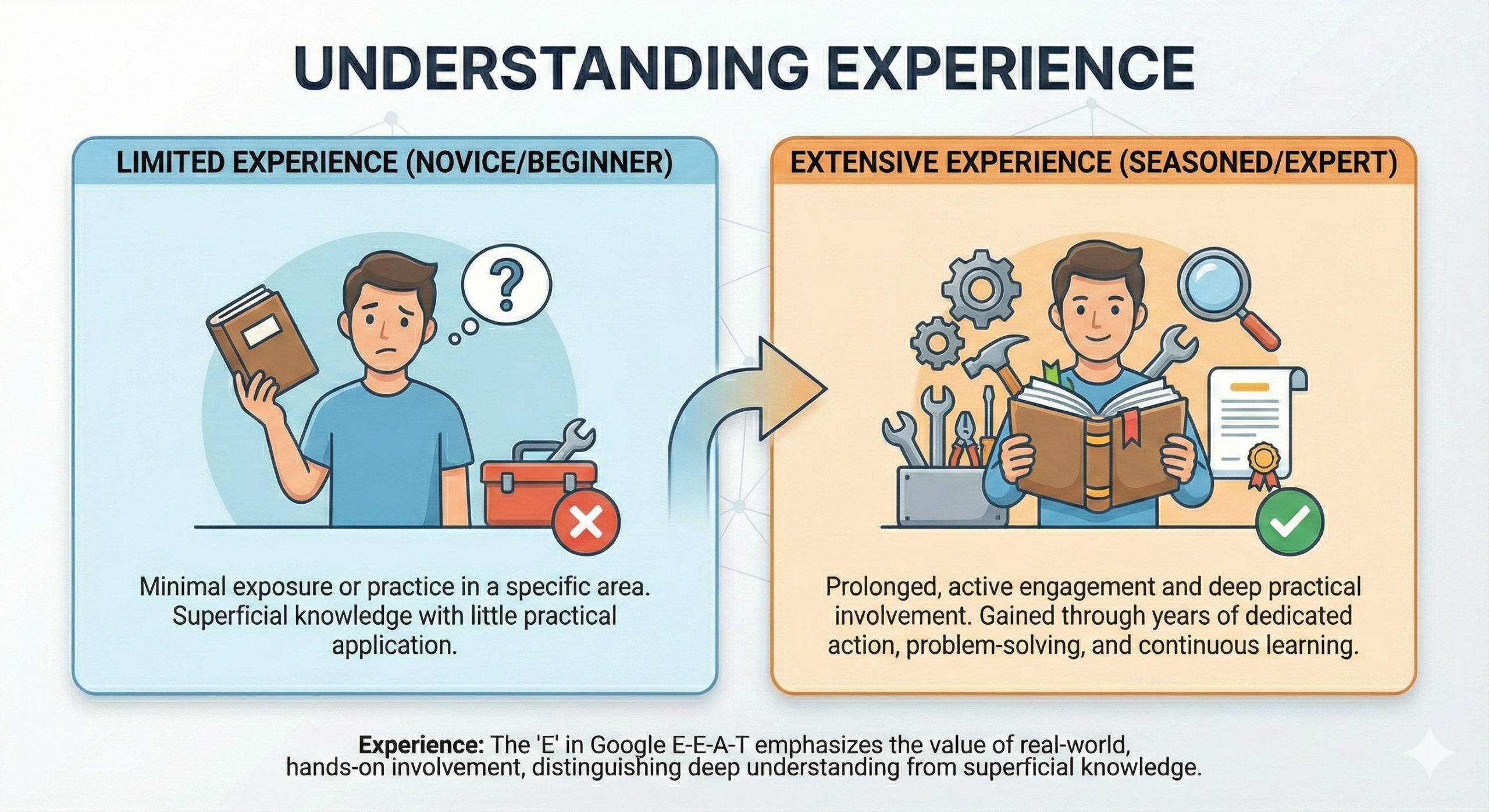
Experience means that the writer has personally interacted with the topic. For example, if someone reviews a mobile phone, Google prefers that the reviewer has actually used the phone. Real-life testing, photos, screenshots, and personal insights help prove genuine involvement.
Readers naturally trust people who speak from their own experiences. When a traveler shares original photos and detailed stories from a trip, the content feels more real. When a business owner describes how a strategy worked in their own company, the advice becomes more believable. Adding personal examples and case studies strengthens the overall value of the page.
Understanding Expertise in E-E-A-T
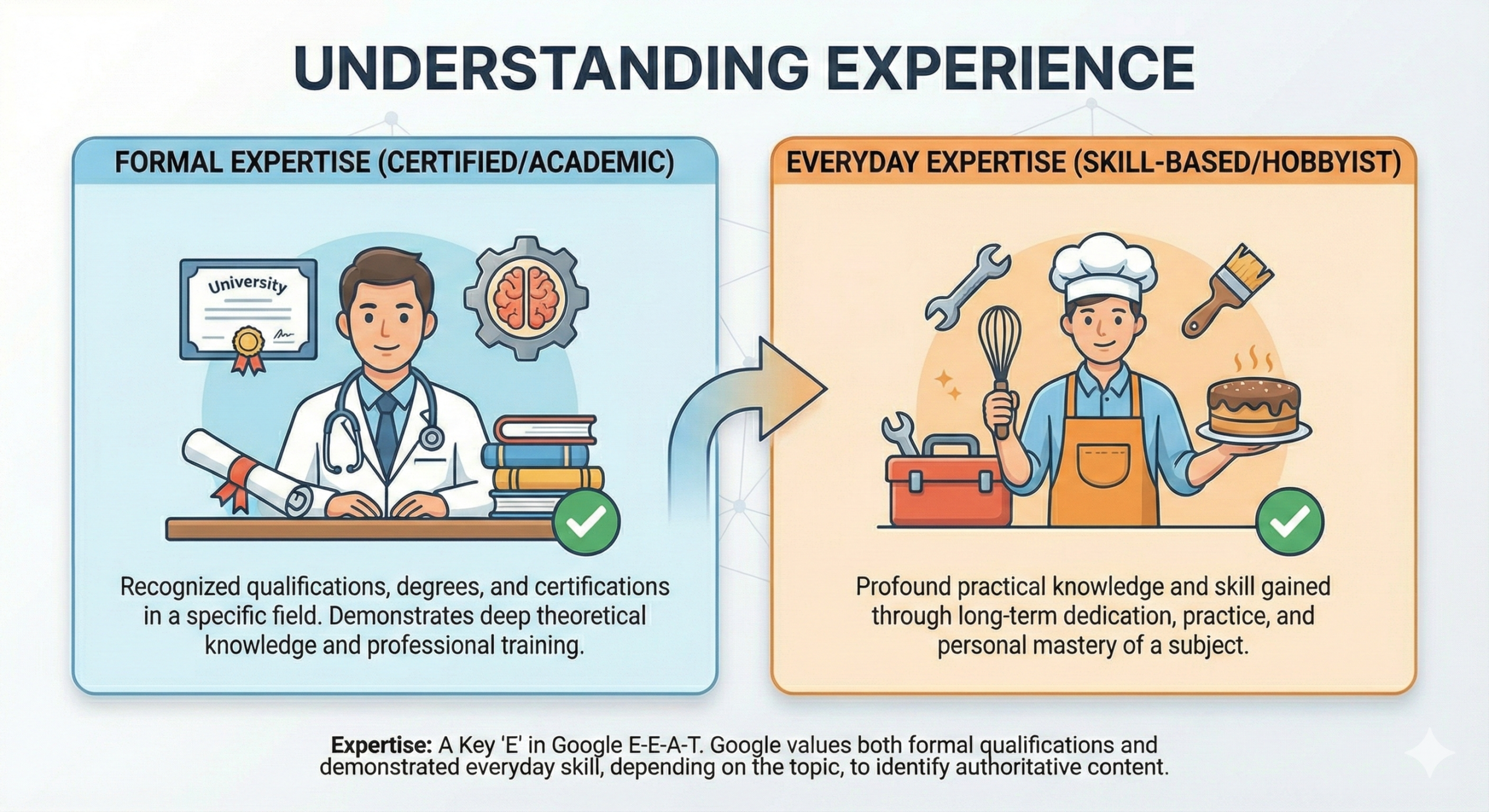
Expertise refers to knowledge and skill in a particular subject. For sensitive topics like health, finance, or law, Google expects high levels of expertise. This may include professional degrees, certifications, licenses, or verified experience.
However, expertise is not limited to formal education. A mechanic who has repaired cars for twenty years may not have a university degree, but their hands-on knowledge shows strong expertise. A teacher who has taught mathematics for years demonstrates expertise through practice and results. Showing deep understanding, clear explanations, and accurate information helps prove this factor.
Understanding Authoritativeness in E-E-A-T
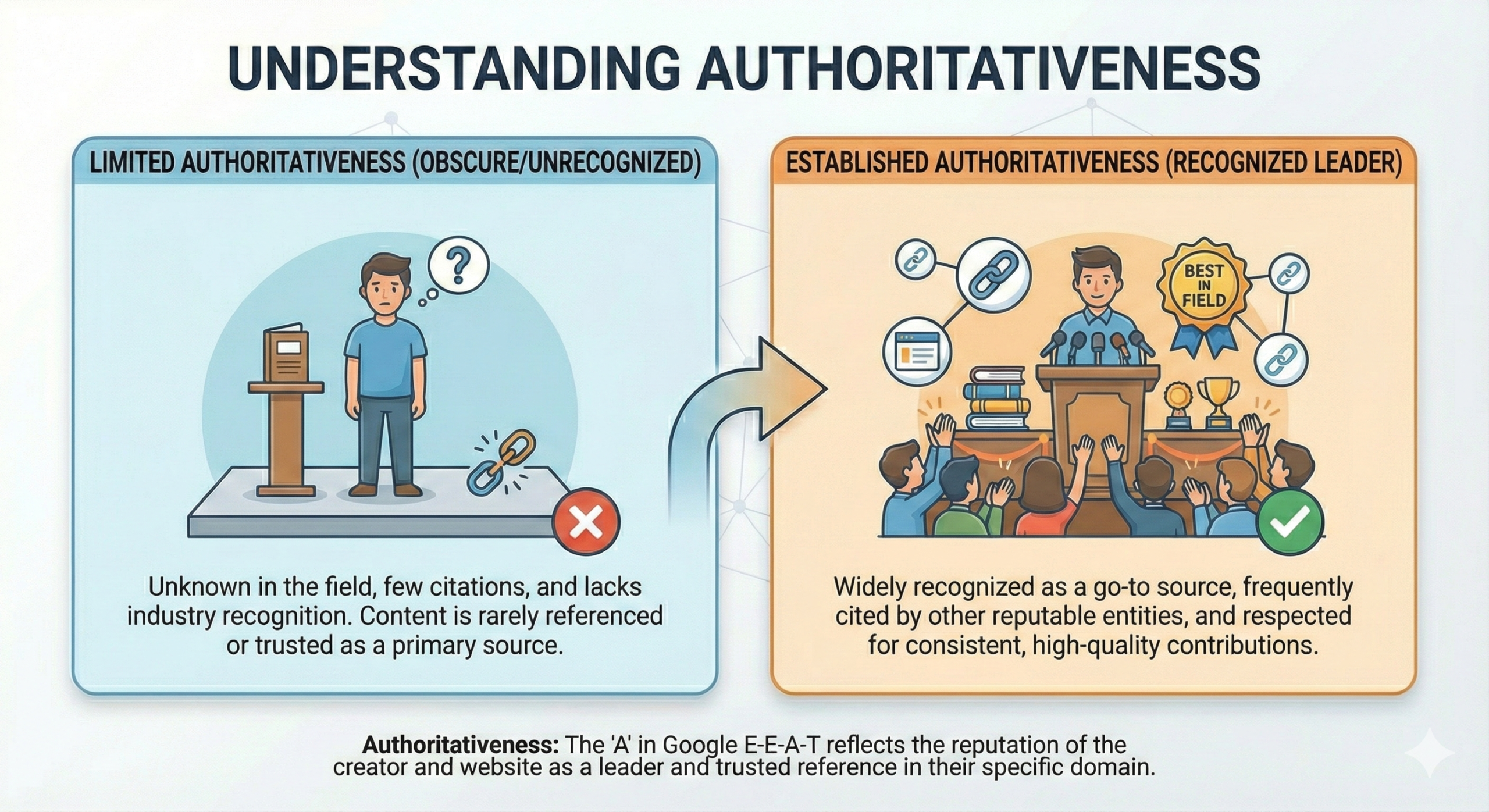
Authoritativeness is about reputation. It reflects how others view your website or brand. When respected websites link to your content, mention your name, or reference your work, your authority grows. Backlinks from trusted publications act like recommendations.
Media mentions, guest posts, expert interviews, and positive online discussions all help strengthen authority. Authority does not grow instantly. It develops gradually as your website consistently publishes valuable and reliable content. Over time, this recognition builds a strong presence in your niche.
Understanding Trust in E-E-A-T
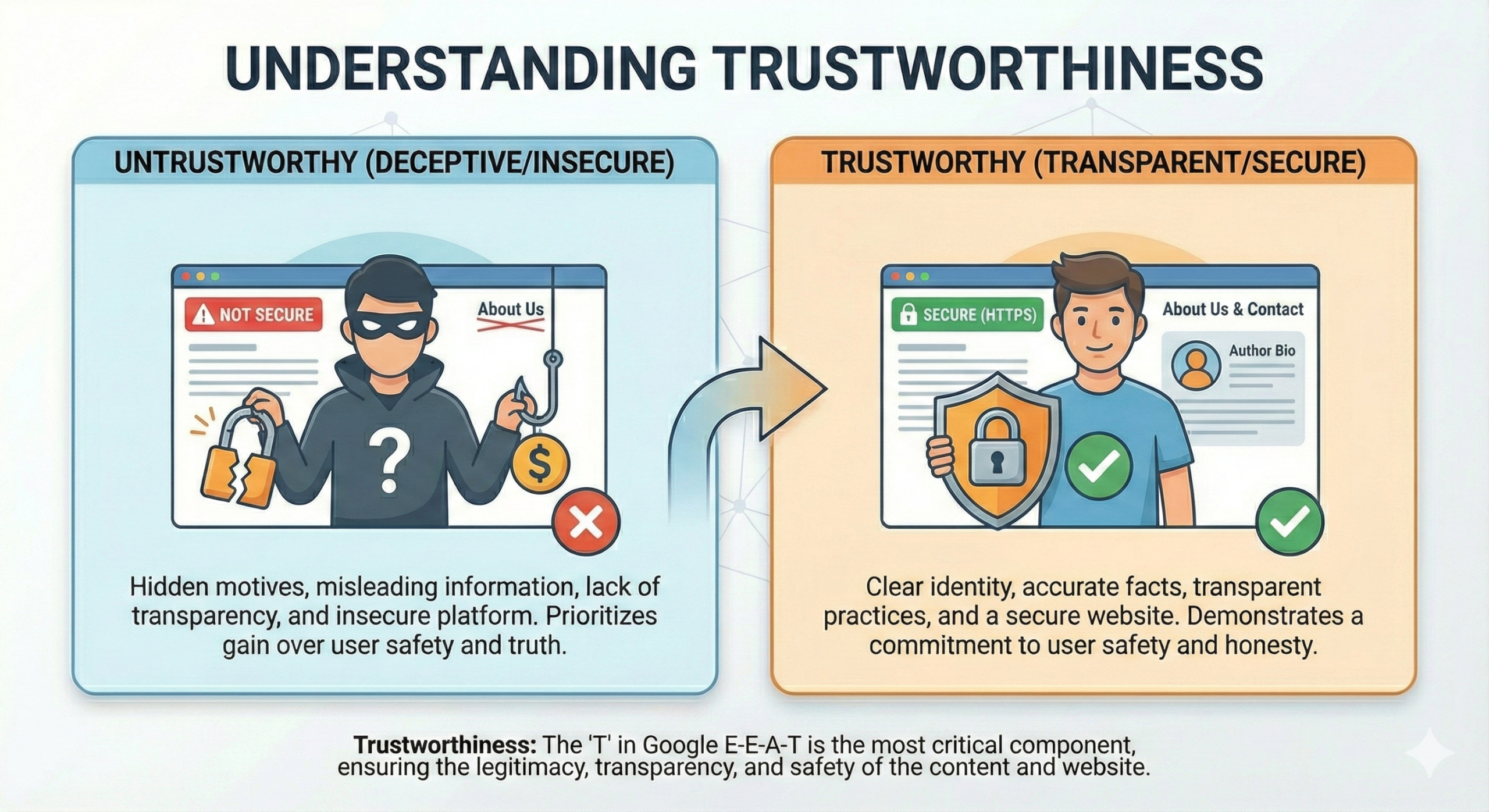
Trust is the foundation of E-E-A-T. Even if a website shows experience and expertise, it will struggle if users do not feel safe. Trust includes website security, transparent contact details, accurate facts, and honest business practices.
A secure website with HTTPS encryption reassures visitors. Clear privacy policies and refund policies build confidence. Genuine customer reviews and clear author information increase credibility. Trust also involves avoiding misleading headlines and false claims. When users feel safe, they are more likely to stay on your site and return in the future.
Why E-E-A-T Matters for SEO
E-E-A-T influences how Google evaluates overall content quality. Although it is not a single measurable ranking factor, it plays a strong role in how Google’s systems interpret a page. Websites that demonstrate strong E-E-A-T often perform better in competitive industries.
Good E-E-A-T leads to better user engagement. When readers trust your information, they spend more time on your pages and may share your content. These positive user behaviors can indirectly support search visibility. In industries where accuracy is critical, strong E-E-A-T can be the deciding factor between ranking high or remaining unseen.
E-E-A-T and YMYL Websites
YMYL websites face stricter evaluation standards. A health blog offering medical treatment advice must show credible authorship and reliable sources. A financial website discussing investments must demonstrate knowledge and responsibility.
Google expects these websites to present expert-backed content with clear references. Displaying professional credentials, linking to trusted organizations, and maintaining updated information are key steps. Since YMYL content can affect someone’s well-being or financial future, the responsibility for accuracy is greater.
How to Improve Experience on Your Website
Improving experience starts with sharing personal involvement. Include real examples, original research, and case studies from your own work. If you review products, show images of actual use. If you discuss strategies, share real results.
Avoid copying information without adding value. Instead, provide insights that come from direct application. First-hand stories make content unique and meaningful.
How to Improve Expertise on Your Website
To strengthen expertise, focus on topics you truly understand. Add author bios that explain qualifications or relevant experience. If possible, have subject experts review your articles for accuracy.
Citing reliable sources and linking to respected institutions increases credibility. Keeping content updated ensures that readers receive current and correct information. Continuous learning and practice in your niche will naturally improve your authority over time.
How to Build Authoritativeness
Building authority involves gaining recognition from others. Create high-quality content that others want to reference. Reach out for guest posting opportunities on respected websites. Participate in interviews or expert roundups within your industry.
Backlinks from trusted domains improve your online reputation. Networking and collaboration also support long-term authority growth. The key is consistency and delivering value repeatedly.
How to Build Trust
Trust can be strengthened through transparency. Clearly display contact information, company details, and author names. Maintain secure website technology. Provide honest reviews and avoid exaggerated claims.
Responding to customer feedback and correcting mistakes openly demonstrates responsibility. Keeping policies simple and easy to understand builds confidence. Every small action that supports honesty contributes to stronger trust signals.
E-E-A-T and Artificial Intelligence (AI)
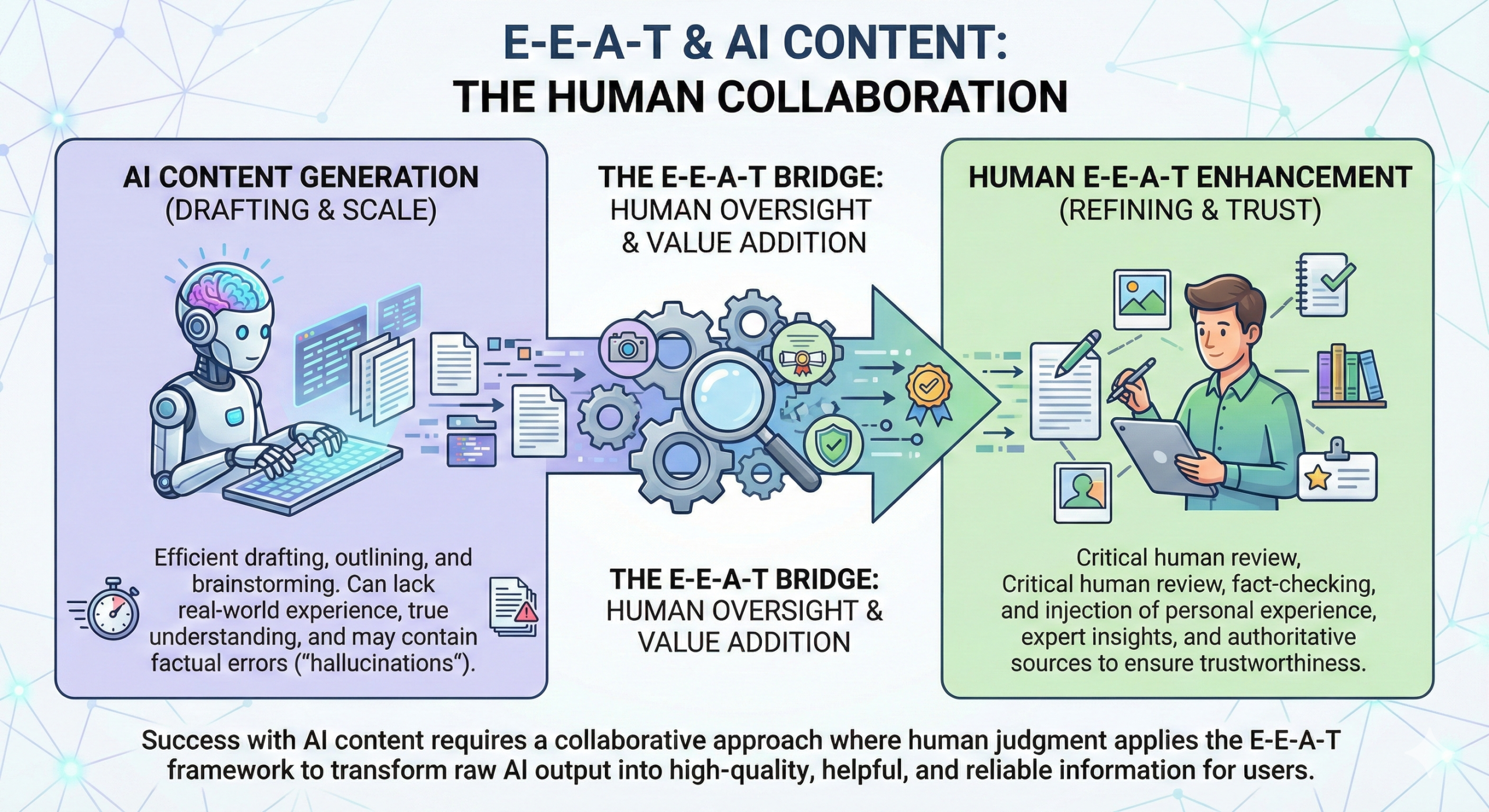
Artificial intelligence tools can assist in content creation, but they do not have real-life experiences. AI systems generate text based on patterns in data, not personal involvement. This means AI alone cannot demonstrate true experience.
AI can support research and drafting, yet human review is necessary to maintain quality. Fact-checking, editing, and adding personal insights are essential steps. Google has stated that AI-generated content is acceptable if it provides value and does not attempt to manipulate rankings.
Helpful Content Update and Its Connection to E-E-A-T
Google’s Helpful Content Update focuses on rewarding content created for people rather than search engines. Websites that produce useful, clear, and informative articles are more likely to benefit. This update aligns closely with E-E-A-T principles.
Content that answers real questions and demonstrates real knowledge fits both systems. If a website creates articles purely to attract traffic without offering depth or clarity, it may struggle. Writing with a reader-first mindset supports long-term growth.
Common Mistakes That Harm E-E-A-T
Certain mistakes can weaken your E-E-A-T signals. These include copying content from other sites, hiding author details, publishing outdated information, and using fake testimonials. Excessive advertisements or misleading titles can also reduce trust.
Failing to update important information, especially in YMYL categories, can damage credibility. Regular content audits help maintain accuracy and reliability.
A Real-World Example of Strong E-E-A-T
Consider a healthcare website operated by licensed doctors. Each article lists the author’s name, qualifications, and references to scientific research. The website uses secure encryption and displays clear contact information. Patients leave genuine reviews about their experiences.
Such a website clearly demonstrates experience, expertise, authority, and trust. In comparison, an anonymous blog without credentials or references would appear less reliable. Google’s systems are designed to favor the first example.
Final Perspective on Google E-E-A-T
Google E-E-A-T is not about quick tricks or short-term gains. It represents a long-term commitment to quality, honesty, and value. By focusing on real experience, proven knowledge, strong reputation, and user trust, websites can improve their SEO performance over time. Consistent effort, transparency, and helpful content remain the foundation of sustainable growth.